How Music, Lighting, and Scent Change How Home Feels for Couples
A home can look exactly the same and feel completely different depending on what’s happening inside it. Two people can sit in the same room, on the same couch, yet experience the space in opposite ways. One feels calm, the other restless. One feels connected, the other overstimulated. Often, this difference has very little to…
A home can look exactly the same and feel completely different depending on what’s happening inside it. Two people can sit in the same room, on the same couch, yet experience the space in opposite ways.
One feels calm, the other restless. One feels connected, the other overstimulated. Often, this difference has very little to do with the room itself and everything to do with the atmosphere surrounding it.
Music, lighting, and scent quietly shape how we experience shared spaces. They influence mood, energy, communication, and even how safe or relaxed we feel around each other.
For couples, especially those building a shared life and thinking ahead to family, these sensory details matter more than they might seem. They set the emotional tone of daily life.
The reassuring part is that you don’t need to redecorate or invest in expensive changes to shift how your home feels. Small, intentional adjustments to sound, light, and scent can transform ordinary evenings into something calmer, warmer, and more connected.
Why Atmosphere Matters More Than Décor for Couples
When people think about improving how their home feels, they often focus on furniture, colors, or organization. While those things matter, atmosphere works on a more immediate level. It affects the nervous system before the mind has time to analyze anything.
For couples, atmosphere can either support connection or quietly undermine it. A space that feels harsh, noisy, or overstimulating can make conversations shorter, patience thinner, and evenings feel rushed.
A space that feels soft and intentional invites slower movement, easier communication, and a sense of being “at home” together. Atmosphere doesn’t fix relationship problems, but it creates conditions where care and connection come more easily.
How Music Shapes Emotional Tone in Shared Spaces
Music has a direct effect on mood and energy. It can lift, calm, energize, or soothe within minutes. In a shared home, music often plays a bigger role than couples realize.
When music is chosen intentionally, it becomes a shared emotional cue. Calm music can signal that the day is winding down. Upbeat music can bring lightness into routine tasks. Familiar songs can create a sense of comfort and shared memory.
The key for couples is awareness. Background noise, such as constant television or random playlists, can create mental clutter without adding value. Choosing music deliberately, even softly, helps define how a space is meant to feel in that moment.
A simple habit like putting on gentle music during dinner or quieter evenings can subtly shift how connected and present you feel together.
Shared Music Choices Build Quiet Connection
Music becomes especially powerful when it’s shared rather than imposed. When one partner consistently controls the sound environment, the other may feel overstimulated or disconnected without realizing why.
Talking about what kinds of music feel relaxing, energizing, or distracting helps create mutual awareness. This doesn’t mean you always have to agree. It means you respect how sound affects each other.
Creating shared playlists for different moods, such as cooking, winding down, or weekend mornings, turns music into a small shared ritual rather than background noise. These rituals build familiarity and emotional safety over time.
Lighting Affects Mood More Than We Expect
Lighting is one of the fastest ways to change how a room feels, yet it’s often left on autopilot. Bright overhead lighting can be useful during the day, but in the evening it can keep the body in a state of alertness even when you want to relax.
For couples, harsh lighting can contribute to restlessness, irritability, and the feeling that the day never quite ends. Softer lighting signals to the body that it’s safe to slow down.
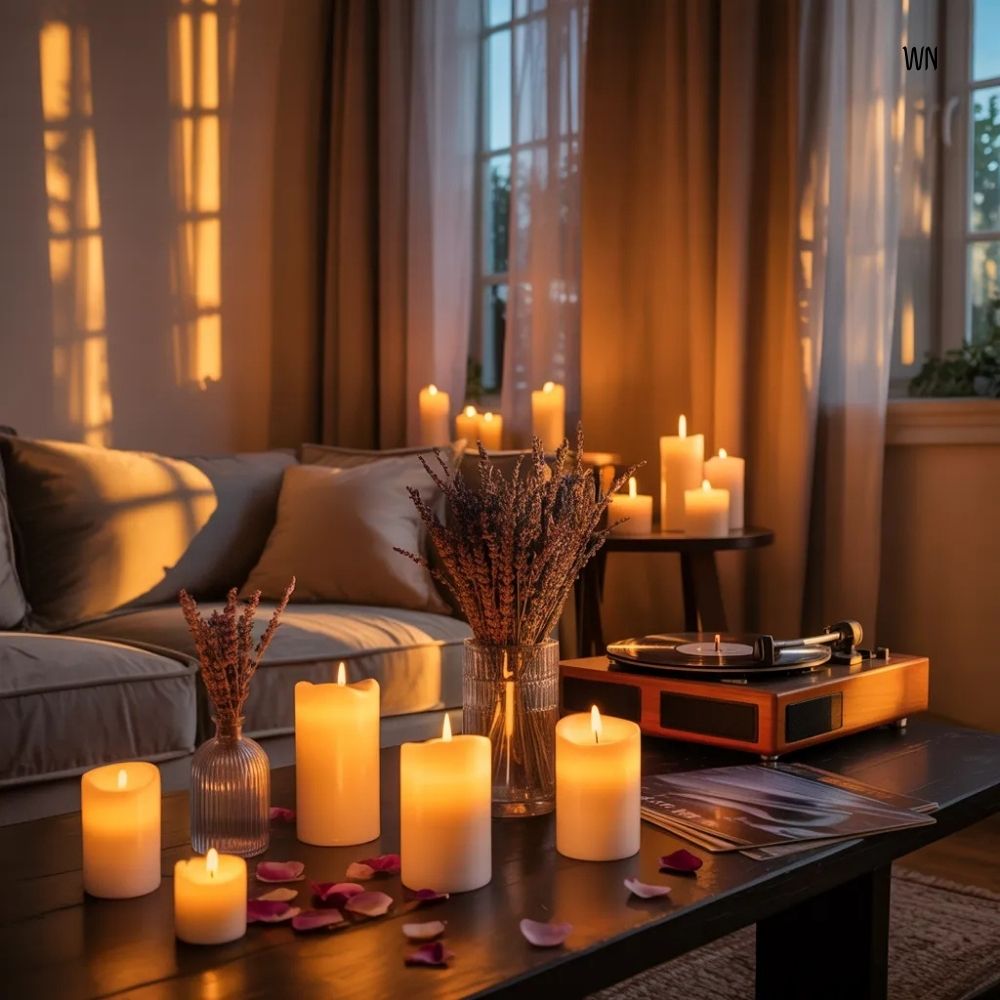
Simple changes like turning off overhead lights in the evening, using lamps, or dimming lights slightly can make shared spaces feel more intimate and calm. This doesn’t require buying new fixtures. It’s about using what you already have differently.
Creating Zones Through Lighting
One helpful way couples can use lighting is by creating gentle “zones” within shared spaces. Brighter light might be useful in areas where tasks happen, such as the kitchen or workspaces. Softer light works better in areas meant for rest and connection.
When lighting matches the purpose of the space, the body responds naturally. Conversations feel easier in softly lit rooms. Relaxation comes more quickly. Even silence feels more comfortable.
This zoning helps couples move through the evening together without needing to announce transitions. The environment does the signaling for you.
Scent Is a Quiet Emotional Anchor
Scent is closely linked to memory and emotion. A familiar scent can instantly bring comfort, while an unpleasant or overpowering one can create tension without conscious awareness.
In shared homes, scent often goes unnoticed until it causes discomfort. Being intentional about scent helps prevent this and turns it into a supportive element instead.
Light, natural scents tend to work best for couples. Citrus, herbal, floral, or wood-based scents feel clean and grounding without overwhelming the senses. Heavy or artificial scents can become distracting, especially when one partner is more sensitive.
Using Scent to Mark Transitions
Scent can be especially helpful in marking transitions in the day. Lighting a candle in the evening, using a diffuser during dinner, or opening windows briefly in the morning creates a sense of rhythm without effort.
These cues help the body recognize when it’s time to shift gears. Over time, they become part of the emotional landscape of the home.
For couples, shared scent rituals can become comforting signals of togetherness, especially during busy or stressful periods.
Making Atmosphere a Shared Choice, Not a Silent Battle
One of the most important aspects of using music, lighting, and scent well is communication. Many couples adjust the environment silently, leading to small but repeated frustrations.
Talking openly about what feels calming or overwhelming helps prevent this. These conversations don’t need to be serious. Simple check-ins like “Does this feel okay?” or “Do you want softer light?” go a long way.
When atmosphere becomes a shared choice, the home feels more supportive to both people.
Why This Matters for Couples Planning a Family
As life grows busier, the home becomes even more important as a place of recovery and connection. Learning how to shape atmosphere now builds skills that matter later.
Music, lighting, and scent offer ways to create calm without effort. They help maintain connection when time and energy are limited. They also create a sense of continuity and comfort that becomes especially valuable as routines change.
These small environmental habits often carry forward naturally into family life, supporting both adults and children.
A Grounding Final Thought
Music, lighting, and scent may seem small, but they shape the emotional experience of home in powerful ways. When couples approach these elements with intention and care, they create an environment that supports connection without effort.
You don’t need to change everything at once. Start with one adjustment and notice how it feels. Over time, these small choices build a home that feels calmer, warmer, and more aligned with the life you’re building together.
If you’d like, we can next explore how to create cozy evening rituals at home, simple ways to reset the mood after stressful days, or small sensory changes that make weekends feel special together.