How to Split Cooking Tasks So It Feels Fun, Not Chaotic
Cooking together sounds lovely in theory. In reality, it often turns into crowding, confusion, and tension. One person reaches for a pan while the other needs the same space. Instructions get repeated. Timing goes off. Suddenly, what was meant to be shared time feels rushed and frustrating. When this happens, many couples quietly decide that…
Cooking together sounds lovely in theory. In reality, it often turns into crowding, confusion, and tension. One person reaches for a pan while the other needs the same space. Instructions get repeated. Timing goes off. Suddenly, what was meant to be shared time feels rushed and frustrating.
When this happens, many couples quietly decide that cooking together “just doesn’t work.” One person takes over, the other stays out of the way, and the idea of shared cooking disappears. What’s lost isn’t just help in the kitchen. It’s an opportunity for connection during an everyday part of life.
The truth is, cooking together can feel fun and grounding, but only when tasks are split in a way that respects space, energy, and rhythm. Most kitchen chaos isn’t about personalities or skill levels. It’s about unclear roles and mismatched timing.
Why Cooking Together So Often Turns Chaotic
Chaos in the kitchen usually comes from everyone trying to do everything at once. When both partners jump into the same stage of cooking without coordination, the space feels crowded and the pace feels rushed.
Another common issue is mental load. One partner often carries the full plan in their head while the other waits for instructions. This creates pressure on one side and passivity on the other, which doesn’t feel fun for either person.
Cooking together works best when responsibility is shared clearly and calmly, without one person managing the other.
Start by Agreeing on the Goal of the Meal
Before splitting tasks, it helps to align on what kind of meal you’re making. Not every dinner needs the same energy.
Some nights call for speed and simplicity. Other nights invite slower, shared cooking. When couples don’t clarify this, one person may be aiming for efficiency while the other is aiming for connection, which creates friction.
A quick check-in like “Do we want this to be quick or relaxed tonight?” sets expectations and makes task-splitting easier.
Split Tasks by Type, Not by Equality
One of the biggest mistakes couples make is trying to split cooking tasks evenly instead of intelligently. Cooking flows better when tasks are divided by type rather than by count.
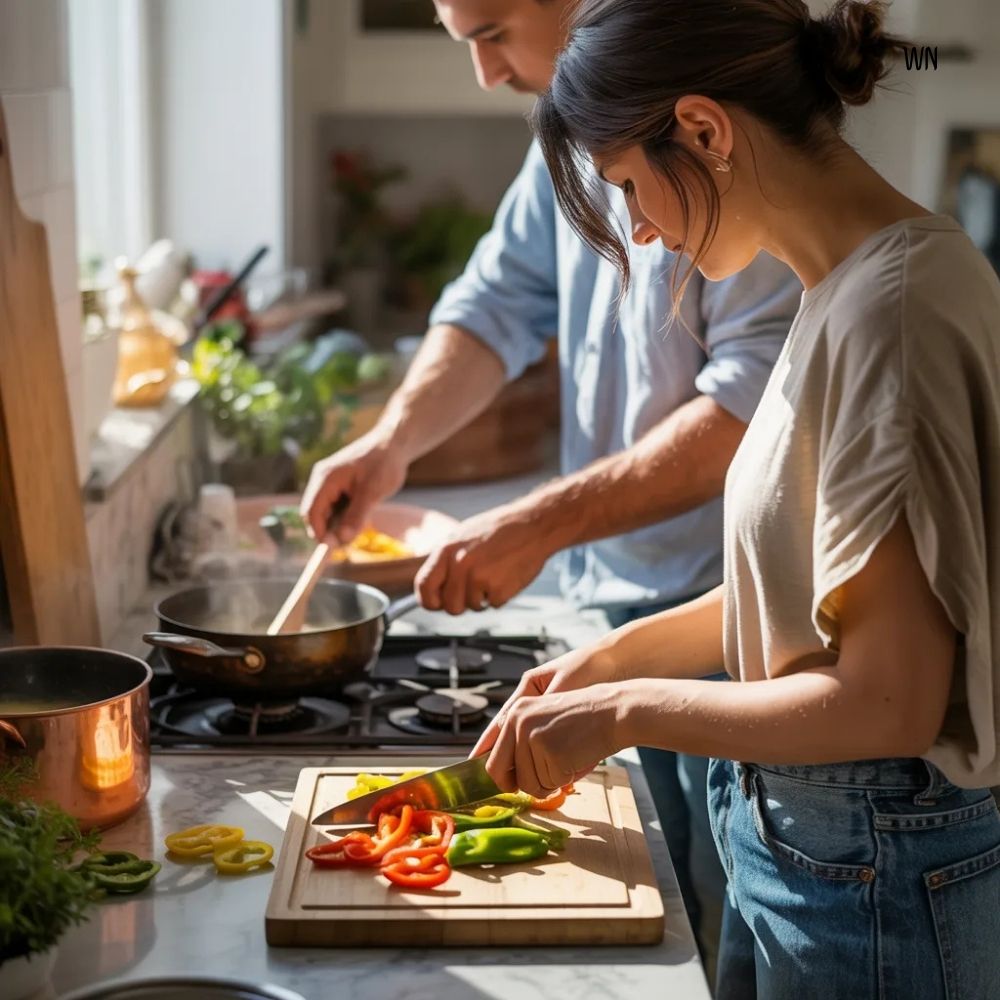
For example, one person handles prep while the other manages heat and timing. Or one person focuses on chopping and assembling while the other handles cooking and plating.
This reduces overlap and keeps both people engaged without competing for the same space. The goal isn’t equal effort on paper. It’s smooth flow in practice.
Chaos often begins because roles are assumed rather than discussed. One person starts chopping, the other starts cooking, and suddenly both need the same tool or counter space.
Taking thirty seconds to decide roles before you begin can change everything. Saying “You prep, I cook” or “You handle the main, I’ll do the sides” creates clarity that prevents friction later.
Clear roles also reduce the need for constant communication, which helps the kitchen feel calmer.
Respect Different Cooking Speeds
People cook at different speeds, and that’s not a flaw. Some like to take their time. Others move quickly and efficiently. When couples ignore this difference, tension builds.
Instead of trying to match pace, it helps to assign tasks that fit each person’s rhythm. A slower-paced person might enjoy careful chopping or seasoning. A faster-paced person might handle timing-sensitive steps.
Respecting natural speed differences keeps cooking collaborative rather than competitive.
Physical crowding is one of the fastest ways to create irritation in the kitchen. Even couples who get along well can feel snappy when space feels tight.
A simple rule that helps is avoiding working in the same zone at the same time. One person uses the stove while the other uses the counter. One person handles the sink while the other handles prep.
Designating zones keeps movement smooth and reduces accidental bumps and interruptions.
Let Go of Perfection and Control
Cooking together stops being fun when one person feels watched or corrected. Even well-intentioned feedback can feel like criticism in the moment.
If you want shared cooking to work, it helps to let go of perfect outcomes. If your partner chops differently, seasons differently, or moves slower, that’s okay. The goal is shared experience, not flawless execution.
Cooking isn’t just chopping and stirring. It’s also planning, timing, and remembering steps. When one partner holds all of that mentally, cooking together doesn’t feel shared.
A simple way to balance this is having both people read the recipe or talk through the plan together. This way, both understand what’s coming next and can anticipate needs without being told. Shared awareness reduces pressure and makes cooperation feel natural.
Keep Conversation Light While Cooking
Heavy conversations during cooking often lead to distraction and mistakes, which increases stress. Cooking together works best when conversation stays light and present-focused.
This doesn’t mean avoiding meaningful talk altogether. It means choosing the right moment. Cooking can be a time for checking in casually, sharing stories, or simply enjoying music together. When attention is split too many ways, chaos creeps in.
Acknowledgment goes a long way in shared cooking. Simple comments like “Thanks for chopping all of that” or “This smells great” reinforce teamwork and ease tension.
These small affirmations help both partners feel valued and make the experience more enjoyable. Cooking together feels better when effort is noticed, even in small ways.
End the Meal Together, Too
Shared cooking doesn’t end when the food is done. Ending the meal together, whether by plating side by side or sitting down at the same time, reinforces the sense of teamwork.
Cleanup can also be part of this shared rhythm. Agreeing on who does what afterward prevents the cooking experience from ending in resentment.
When the whole process feels shared, cooking together becomes something couples look forward to rather than avoid.
Why This Matters Beyond the Kitchen
Learning how to split cooking tasks well builds skills that apply far beyond dinner. It teaches communication, flexibility, and mutual respect in everyday situations.
These habits matter deeply as life becomes fuller. Cooking together becomes practice for sharing responsibilities without friction. When couples get this right, the kitchen becomes a place of connection rather than conflict.
A Grounding Final Thought
Cooking together doesn’t have to be chaotic to be shared. With clear roles, respect for differences, and a focus on flow rather than perfection, it can become one of the most grounding parts of daily life.
You don’t need to change everything at once. Try one small adjustment tonight and notice how it feels. Over time, these shifts turn cooking into something that supports both nourishment and connection.