One Food Habit That Makes Daily Nutrition Easier
For most people, eating “well” is not hard because they don’t know what healthy food looks like. It is hard because every day requires dozens of small decisions. What to eat, when to eat, how much effort to put in, and whether today even deserves that effort at all. By the time dinner arrives, energy…
For most people, eating “well” is not hard because they don’t know what healthy food looks like. It is hard because every day requires dozens of small decisions.
What to eat, when to eat, how much effort to put in, and whether today even deserves that effort at all. By the time dinner arrives, energy is low and the easiest option often wins, even if it is not what you originally wanted.
What actually makes daily nutrition easier is not stricter rules or better motivation. It is reducing the number of decisions you have to make while still leaving room for flexibility. When couples especially struggle with food, it is rarely about lack of care. It is about mental load.
There is one food habit that consistently lowers that load and makes nutrition feel manageable again, even during busy or low-energy weeks.
The Habit: Build Every Main Meal Around One Simple “Anchor”
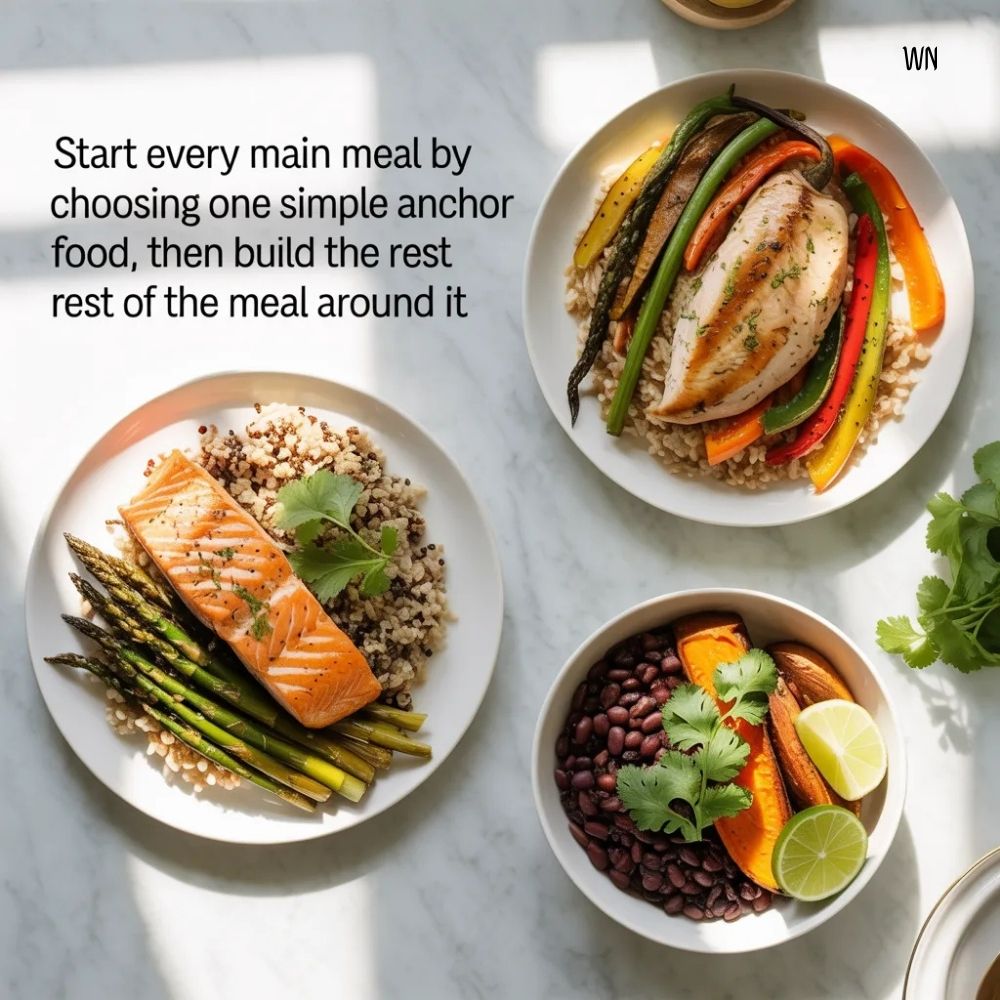
The habit is this: Start every main meal by choosing one simple anchor food, then build the rest of the meal around it.
The anchor is not a recipe. It is not a macro target. It is not a diet rule. It is one reliable food category that grounds the meal and quietly improves nutrition without needing tracking or restriction.
An anchor can be:
- a protein source
- a fiber-rich base
- or a cooked staple you already have
Once the anchor is chosen, everything else becomes easier to decide.
What an Anchor Food Actually Is
An anchor food is the part of the meal that answers the question, “What is this meal built around?”
It should be:
- familiar
- easy to prepare or already prepared
- nutritionally useful
- flexible enough to work with different flavors
Examples of common anchor foods include:
- eggs
- chicken, tofu, beans, or lentils
- yogurt
- rice, potatoes, or pasta
- vegetables that are easy to cook
The anchor does not need to be perfect. It needs to be reliable.
Why This Habit Makes Nutrition Easier
Most food stress comes from trying to design a “complete” meal from scratch every time. That means thinking about balance, variety, health, taste, effort, and preferences all at once. That is exhausting.
Anchoring removes that pressure. Once the anchor is chosen, the rest of the meal becomes supportive rather than central. You are no longer deciding everything. You are simply completing a structure that already exists.
This habit works because:
- it reduces decision fatigue
- it prevents meals from becoming unbalanced by accident
- it adapts easily to low-energy days
- it works for both quick meals and sit-down dinners
How This Looks in Real Daily Life
Instead of asking, “What should we eat tonight?” you ask, “What’s our anchor?” That question alone narrows the field dramatically.
If the anchor is eggs, the meal might become eggs with toast and vegetables. If the anchor is rice, the meal might become rice with leftovers and something green. If the anchor is yogurt, the meal might become yogurt with fruit, nuts, or honey.
You are not aiming for variety in every meal. You are aiming for enough structure to make eating easier.
How Couples Can Use This Habit Together
For couples, the anchor habit works especially well because it creates a shared starting point without forcing agreement on every detail.
One partner can choose the anchor. The other can decide how to round it out. Or the anchor can be something already prepared, like leftovers or a batch-cooked staple.
This reduces the back-and-forth of food decisions and lowers the chance of frustration or defaulting to takeout simply because no one wants to decide.
Examples of Anchors Across the Day
Breakfast
Anchor: eggs or yogurt. The rest of the meal adjusts based on energy. Toast if hungry, fruit if light, nothing extra if rushed.
Lunch
Anchor: leftovers, beans, or a grain. Add whatever vegetables or sauces are available. The anchor ensures the meal is filling enough.
Dinner
Anchor: a protein or cooked staple. The rest of the plate becomes flexible. Frozen vegetables, bread, or a simple sauce are enough.
The anchor keeps the meal from feeling random or nutritionally thin, even when effort is low.
How to Start This Habit Without Overthinking
Start with one meal per day. Dinner is often the easiest. For one week, when it is time to eat, ask: “What’s our anchor?” Do not worry about whether it is the “best” choice. Choose what is available and manageable.
After a few days, the question becomes automatic. Nutrition improves quietly, without effort or pressure.
One mistake is trying to choose a different anchor every day for the sake of variety. Repetition is not a problem. Repetition is what makes the habit work.
Another mistake is turning the anchor into a rule. Anchors are guides, not obligations. If a meal does not need one, skip it.
Finally, avoid judging the anchor choice. Some days the anchor will be simple or less ideal. The habit still counts.
Why This Works Long-Term
This habit holds up during busy weeks, stressful seasons, and life changes because it does not depend on motivation. It depends on structure.
When energy drops, you still choose an anchor. When schedules shift, you still choose an anchor. When life becomes more complex, the habit becomes more valuable, not less.
For couples planning a family or simply trying to build sustainable routines, this kind of quiet consistency matters more than any short-term plan.
A Realistic Example From a Normal Week
On Monday, dinner is built around rice already in the fridge. On Tuesday, eggs become the anchor. On Wednesday, leftovers do the job. On Thursday, yogurt and fruit count as dinner because energy is low.
Nothing dramatic changes, but meals feel easier. Decisions feel lighter. Nutrition improves without effort.
Final Practical Takeaway
Daily nutrition becomes difficult when every meal feels like a fresh problem to solve. Choosing one simple anchor food removes that pressure and gives meals a quiet structure that adapts to real life.
You do not need better discipline or more planning. You need fewer decisions and a habit that meets you where you are.
Start with one meal, one anchor, and let the rest of the plate fall into place. Over time, eating well stops feeling like something you have to manage and starts feeling like something that simply happens.