What Needs to Change in Your House to Welcome a Baby
When people think about preparing their home for a baby, they usually think about buying things. A crib, clothes, bottles, maybe a changing table. What often gets missed is that the biggest challenge is not what you add to the house, but how the house functions once a baby arrives. A home that works well…
When people think about preparing their home for a baby, they usually think about buying things. A crib, clothes, bottles, maybe a changing table. What often gets missed is that the biggest challenge is not what you add to the house, but how the house functions once a baby arrives.
A home that works well for two adults can become surprisingly difficult once sleep is fragmented, hands are full, and attention is constantly interrupted. Preparing your house is less about creating a perfect nursery and more about reducing friction in daily life so small tasks do not become exhausting.
This article focuses on specific changes that actually help once the baby is home. These are not aesthetic upgrades. They are functional shifts that make nights easier, days calmer, and routines more realistic.
Change 1: Reduce Friction in the Spaces You Use Most
Before changing anything, identify the three spaces you use most every day. For most couples, these are the bedroom, the bathroom, and the kitchen. These spaces will carry the most strain once a baby arrives.
The goal is to reduce unnecessary movement, decisions, and steps. Anything that currently requires extra effort will feel heavier later.
Start by asking one simple question in each space: What do we reach for multiple times a day? Those items should be easy to access with one hand and without bending, opening multiple drawers, or searching.
In the bedroom, this often means moving essentials like water, phone chargers, burp cloths, and basic baby supplies closer to the bed. In the bathroom, it means clearing counter space and making room for quick cleanup. In the kitchen, it means reorganizing frequently used items so meals and bottles can be handled quickly.
Change 2: Create One Clear Baby Care Station Per Floor
One of the most common early frustrations is realizing that everything you need is always in another room. When energy is low, walking across the house repeatedly becomes exhausting.
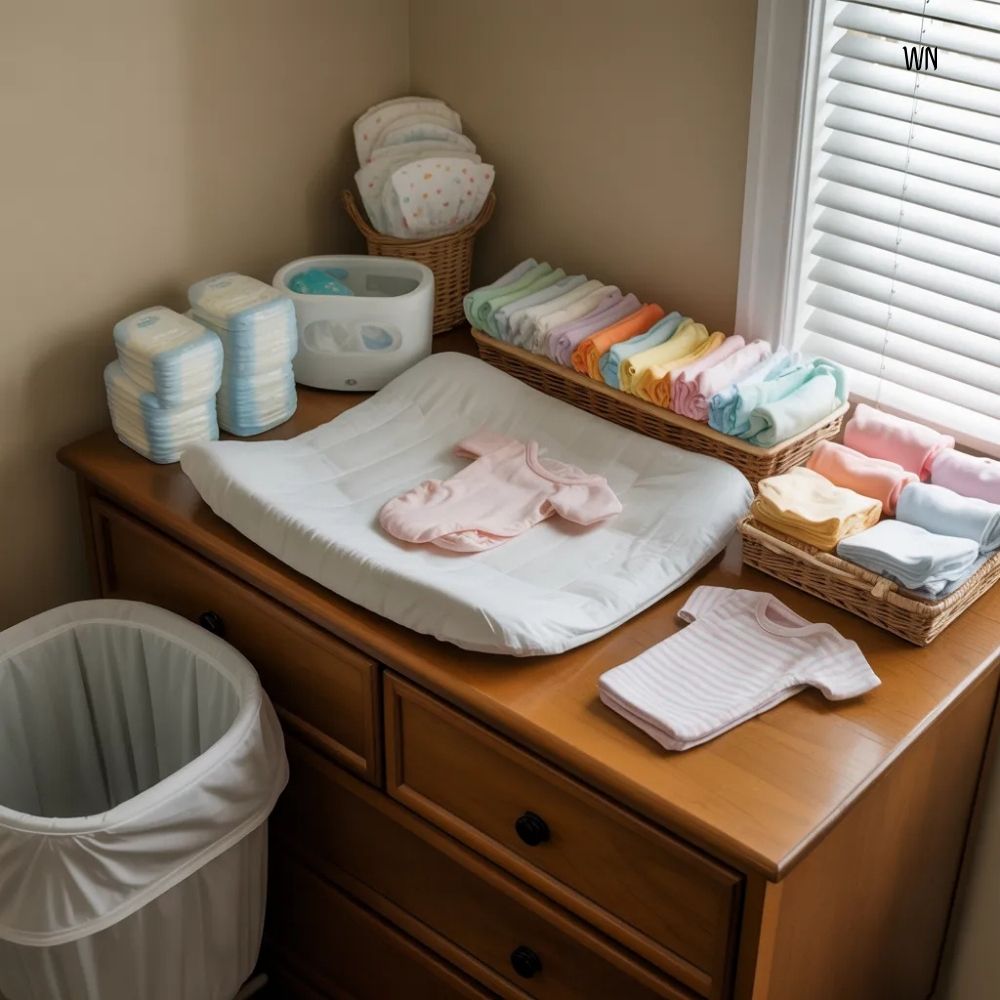
Instead of spreading baby items everywhere, create one clear baby care station per floor. This is not a full nursery setup. It is a functional cluster of essentials.
Each station should include:
- diapers
- wipes
- a surface for quick changes
- burp cloths
- spare clothes
- trash or disposal option
This station should be reachable without thinking and usable without rearranging anything. Open storage works better than drawers because visibility reduces mental load. This change alone prevents countless unnecessary trips and interruptions.
Change 3: Rethink Nighttime Flow, Not Just Sleeping Arrangements
Many couples focus heavily on where the baby will sleep, but far less on what nighttime movement will look like. Nighttime is when friction feels largest because fatigue amplifies everything.
Walk through a typical night scenario now. Imagine feeding, changing, soothing, and settling a baby at 2am. Notice where lights are too bright, where items are far away, or where you have to make noise.
Practical adjustments include:
- dim, warm night lights instead of overhead lighting
- silent storage instead of noisy drawers
- keeping nighttime supplies separate from daytime ones
- clear walking paths with nothing to trip over
The goal is not silence or perfection. The goal is reducing stimulation and movement so everyone can return to rest faster.
Change 4: Simplify Storage Instead of Adding More
Many people respond to a baby by adding storage solutions without simplifying what already exists. This usually increases clutter and confusion.
Before adding anything new, reduce what is already there. Go through closets, drawers, and cabinets and remove items you rarely use. This creates physical and mental space.
Once space is cleared, assign storage based on frequency of use, not category. Items used daily should be visible and reachable. Items used weekly can be stored higher or deeper.
This applies to baby items and adult items alike. A house that works well for a baby also works better for adults.
Change 5: Make the Kitchen Baby-Compatible Early
The kitchen becomes a central stress point once feeding enters the picture. Whether breastfeeding, formula feeding, or a mix, the kitchen needs to support quick, repetitive tasks.
Key changes include:
- clearing one counter area for feeding-related tasks
- grouping all feeding supplies together
- keeping cleaning supplies close to the sink
- simplifying cookware to reduce choices
If something requires multiple steps to access, it will feel harder later. Simplifying the kitchen now prevents frustration when time and patience are limited.

Change 6: Adjust Furniture Placement for Safety and Flow
You do not need to baby-proof everything immediately, but basic layout changes help early on.
Look at your main living space and ask:
- Are there sharp corners in walking paths?
- Is there enough floor space for movement and play?
- Are frequently used items stored low or high?
Rearranging furniture to create open space reduces stress and allows flexibility as your baby grows. This also makes cleaning easier, which matters more than most people expect. Avoid overcorrecting. Simple changes are enough at this stage.
Change 7: Create Drop Zones for Adult Essentials
One overlooked change is creating adult drop zones. When adults are tired, misplacing keys, phones, or wallets becomes a recurring problem. Choose one consistent place for:
- keys
- phones
- wallets
- baby-related documents
This prevents frantic searching during already stressful moments. It also reduces conflict caused by small frustrations. These zones should be obvious and used consistently by both partners.
Change 8: Make Cleaning Faster, Not More Frequent
A clean house feels different once a baby arrives, but standards often need to shift. The goal becomes maintaining a baseline rather than perfection.
Prepare by:
- storing cleaning supplies where they are used
- choosing fewer surfaces that collect clutter
- reducing decorative items that require upkeep
Quick cleanups should be possible in under ten minutes. If cleaning requires setup or moving things around, it will be avoided. Design for speed, not appearance.
Change 9: Prepare One Calm Reset Area for Adults
This is often overlooked, but essential. Adults also need a place to decompress. Choose one area in the house that remains relatively uncluttered and calm. This might be part of the bedroom or a corner of the living room.
This area should support rest, not productivity. It becomes important for emotional regulation, especially in early weeks.
How to Start Without Feeling Overwhelmed
Do not try to change everything at once. Start with one room, one system, or one flow. A good starting point is nighttime flow or kitchen setup, because those areas create the most immediate strain.
Each small change compounds. You do not need a perfect house. You need a house that works under pressure.
Homes that are prepared functionally feel calmer, even when life is loud. They reduce decision fatigue, unnecessary movement, and small points of frustration.
This matters because stress is cumulative. Removing small obstacles creates space for rest, connection, and recovery.
Final Practical Takeaway
Welcoming a baby does not require a new house or expensive gear. It requires intentional changes that make daily life easier when energy is low.
If one change saves you five minutes or one frustration per day, it is worth doing. Over weeks and months, those small improvements become the difference between coping and constantly catching up. A well-prepared house does not look perfect. It works.