3 Simple “Cook Once, Eat Twice” Meals for Couples
Cooking together can be one of the most grounding things a couple does, but it can also become tiring when every meal feels like starting from scratch. Many couples want to eat well at home, yet by the time the workday ends, energy is low and decision fatigue is high. This is where “cook once,…
Cooking together can be one of the most grounding things a couple does, but it can also become tiring when every meal feels like starting from scratch.
Many couples want to eat well at home, yet by the time the workday ends, energy is low and decision fatigue is high. This is where “cook once, eat twice” meals quietly change everything.
These kinds of meals are not about strict meal prep or eating the same thing all week. They’re about cooking one solid, comforting dish together, then using it again in a slightly different way later. The result is less time in the kitchen, fewer dishes, and more room to enjoy evenings.
The meals below are designed specifically for couples. They are simple, flexible, and forgiving.
Each one gives you a satisfying dinner the first night, then transforms easily into a second meal that feels fresh rather than repetitive. They also work well for cooking together, with natural ways to split tasks so no one feels overwhelmed.
Why “Cook Once, Eat Twice” Works So Well for Couples
Before we get into the recipes, it helps to understand why this approach fits shared life so well. Cooking once and eating twice reduces the number of decisions you have to make during the week. It also creates a rhythm where food feels planned without being rigid.
For couples, this style of cooking reduces friction. One partner isn’t constantly thinking about what’s next, and the other doesn’t feel boxed into eating leftovers that feel uninspired. Instead, meals feel intentional but flexible, which is exactly what most busy couples need.
It also encourages cooking together without requiring long kitchen sessions every night. You invest a bit more effort once, then enjoy the payoff later.
Meal 1: Slow-Roasted Chicken That Becomes Two Comforting Dinners
This is a classic “cook once, eat twice” meal for a reason. A simple roasted chicken creates a warm, satisfying dinner the first night and turns into an easy, comforting second meal with almost no extra work.
First Meal: Lemon Garlic Roasted Chicken with Vegetables
What you’ll need
- 1 whole chicken (about 4 pounds)
- 2 tablespoons olive oil
- 1 lemon, halved
- 4 garlic cloves, lightly crushed
- 1 teaspoon salt
- ½ teaspoon black pepper
- 1 teaspoon dried herbs (thyme, rosemary, or a mix)
- Assorted vegetables (carrots, potatoes, onions, or whatever you enjoy)
How to make it
Preheat the oven to 425°F (220°C). Pat the chicken dry and place it in a roasting pan. Rub the skin with olive oil, salt, pepper, and dried herbs.
Place the lemon halves and garlic inside the cavity. Arrange vegetables around the chicken and drizzle them lightly with oil and salt. Roast uncovered for about 1 hour and 15 minutes, or until the chicken is golden and cooked through.
How to cook together
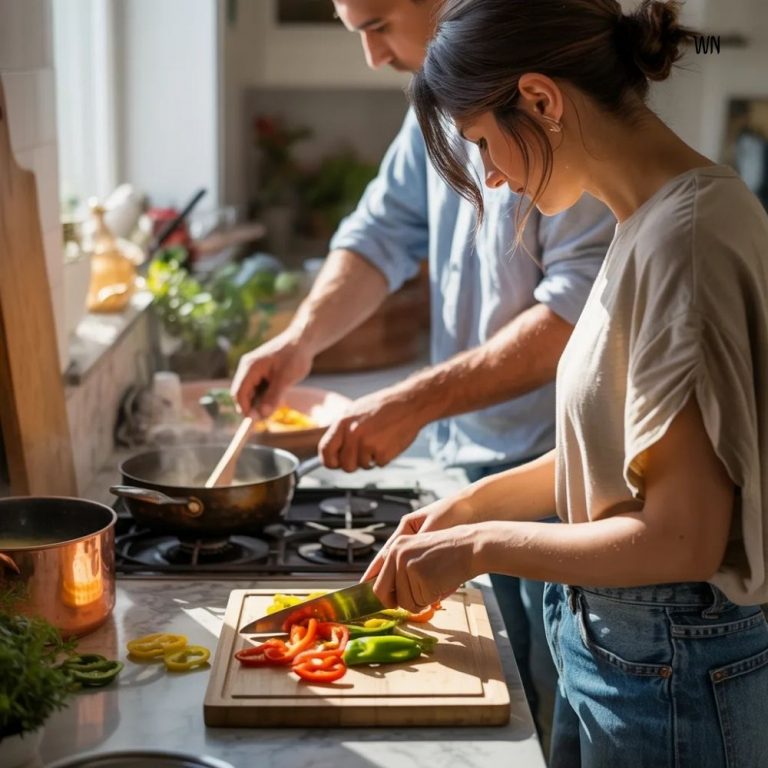
One person can prep the chicken while the other chops vegetables and sets up the pan. It’s relaxed, hands-on, and easy to do side by side without crowding each other.
Serve with the roasted vegetables and enjoy a simple, comforting dinner.
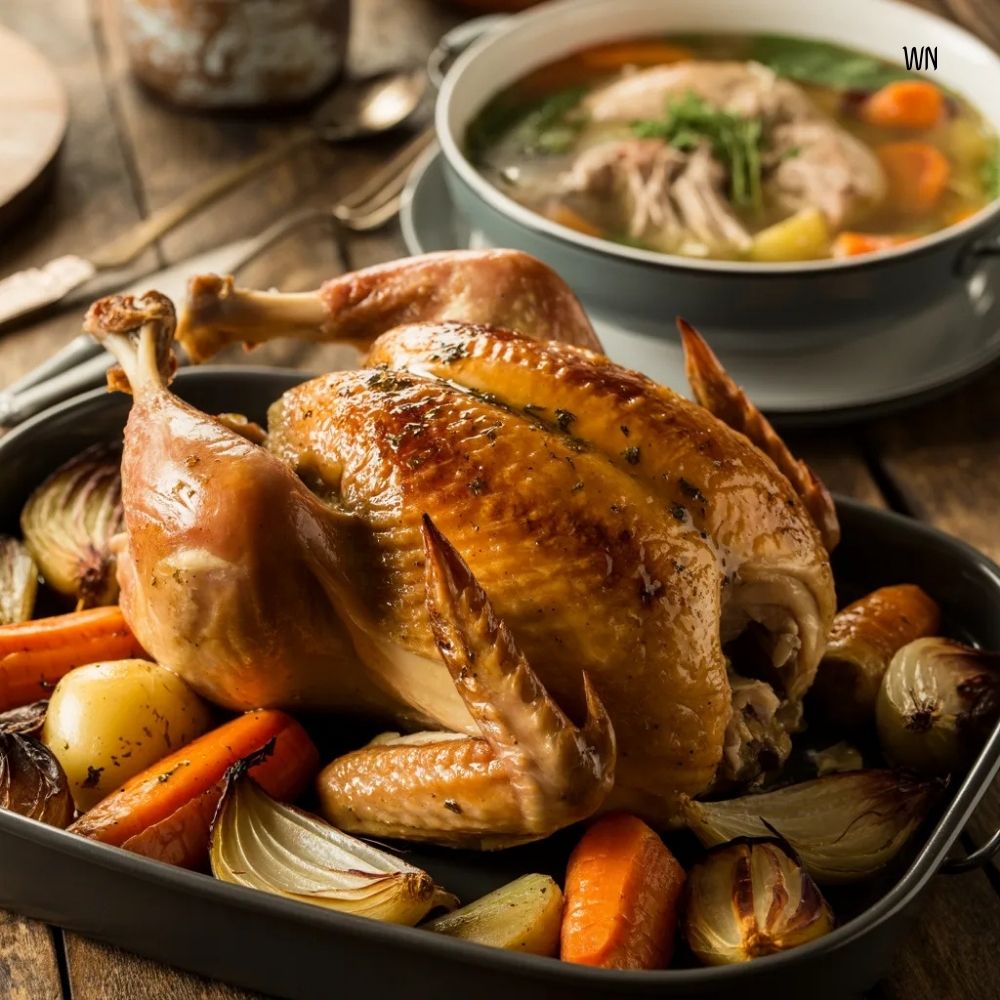
Second Meal: Chicken & Vegetable Skillet or Simple Chicken Soup
The next day, remove the remaining chicken from the bones.
For a quick skillet meal, sauté the leftover vegetables with the shredded chicken, add a splash of broth or water, and season to taste. Serve over rice, pasta, or with bread.
For a light soup, simmer the chicken with broth, leftover vegetables, and a handful of pasta or rice. This turns yesterday’s roast into something warm and soothing with minimal effort.
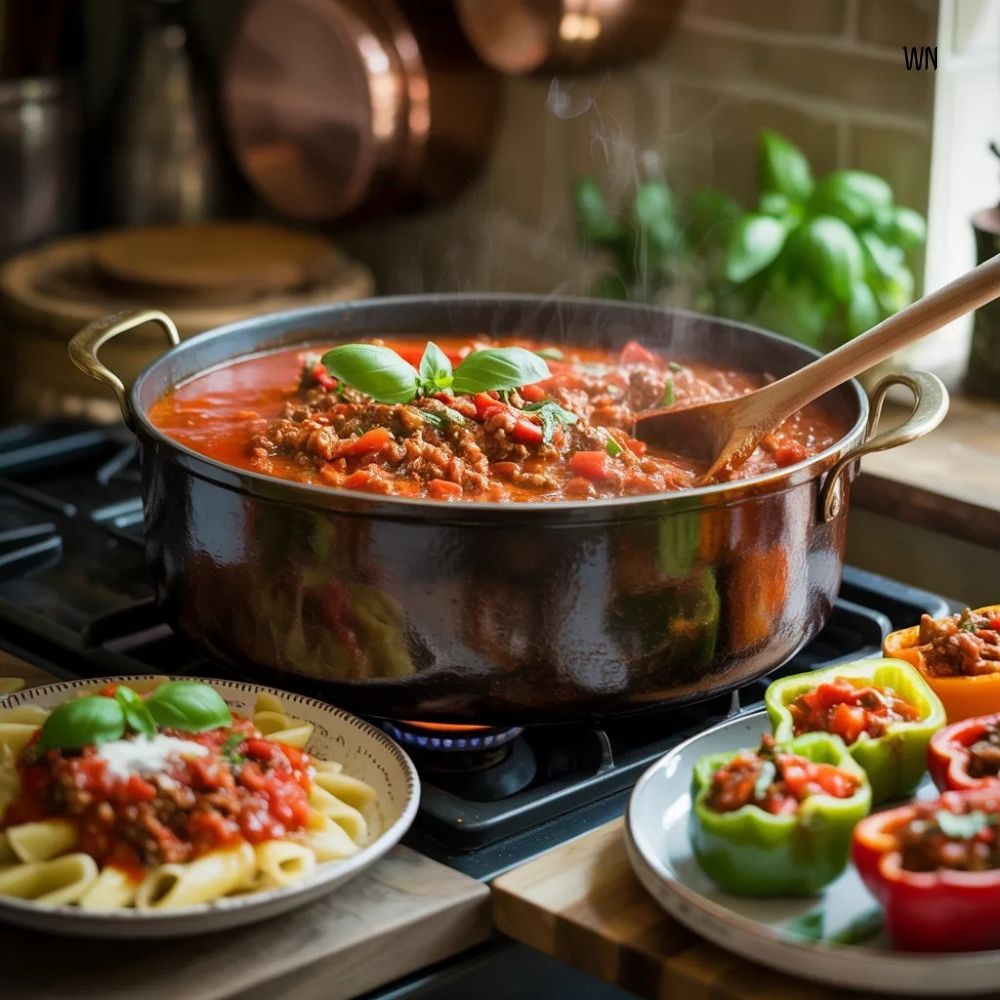
Meal 2: Big Pot of Tomato Sauce That Becomes Two Cozy Dinners
A large pot of tomato sauce is one of the easiest ways to cook once and eat twice without feeling repetitive. It’s also a great meal to cook together, since it allows conversation and shared pacing rather than rushing.
First Meal: Simple Tomato Meat Sauce Over Pasta
What you’ll need
- 1 pound ground meat (beef, turkey, or plant-based alternative)
- 1 onion, finely chopped
- 3 cloves garlic, minced
- 2 tablespoons olive oil
- 1 large can crushed tomatoes
- 1 teaspoon salt
- ½ teaspoon black pepper
- 1 teaspoon dried Italian herbs
- Pasta of your choice
How to make it
Heat olive oil in a large pot. Sauté the onion until soft, then add garlic and cook briefly. Add ground meat and cook until browned. Stir in crushed tomatoes, salt, pepper, and herbs. Simmer gently for 25 to 30 minutes while you cook pasta separately.
How to cook together
One partner can handle chopping and sautéing while the other manages pasta and seasoning. The sauce simmers on its own, leaving space for relaxed conversation. Serve over pasta with cheese or bread.
Second Meal: Baked Pasta or Stuffed Peppers
For the second meal, use the leftover sauce in a new way.
For baked pasta, mix sauce with cooked pasta, add cheese, and bake until bubbly. For stuffed peppers, mix sauce with cooked rice, fill halved peppers, top with cheese, and bake until tender.
The flavors feel familiar, but the presentation feels new, which keeps leftovers enjoyable.
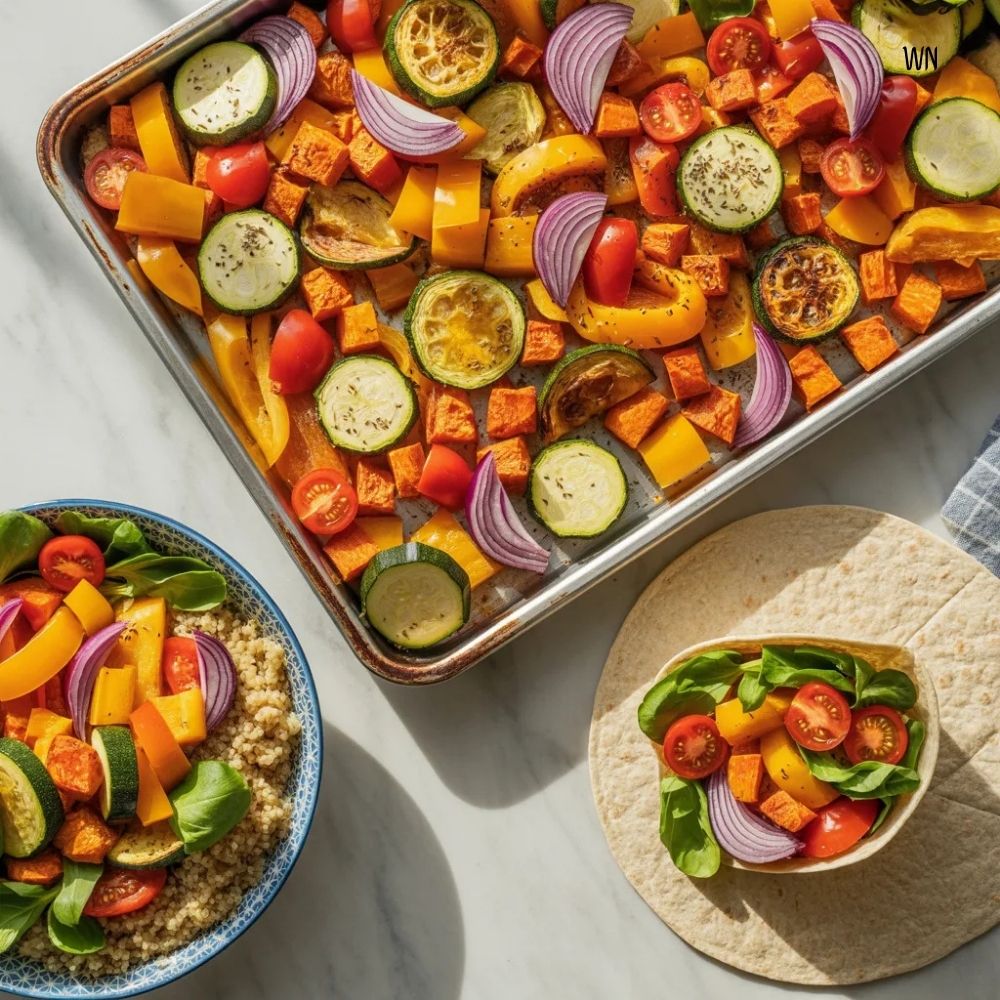
Meal 3: One Big Pan of Roasted Vegetables That Turns Into Two Easy Meals
Roasted vegetables are incredibly versatile and perfect for couples who want flexibility. Cooking a large batch once gives you endless options without locking you into one specific dish.
First Meal: Roasted Vegetable Grain Bowls
What you’ll need
- Assorted vegetables (broccoli, sweet potatoes, bell peppers, zucchini, onions)
- 3 tablespoons olive oil
- Salt and pepper
- Cooked grain (rice, quinoa, or farro)
- Optional protein (chicken, chickpeas, or eggs)
How to make it
Preheat the oven to 425°F (220°C). Toss vegetables with olive oil, salt, and pepper. Roast for 30 to 40 minutes, stirring once, until caramelized. Serve over grains with your chosen protein.
How to cook together
One person chops vegetables while the other prepares grains or protein. Everything comes together easily without stress.
Second Meal: Vegetable Wraps or Quick Stir-Fry
The next day, use the roasted vegetables in a new form.
For wraps, reheat vegetables, add greens and sauce, and wrap in tortillas.
For a stir-fry, sauté vegetables briefly with soy sauce or spices and serve over rice.
The vegetables retain flavor and texture, making the second meal feel intentional rather than leftover-based.
Why These Meals Actually Work in Real Life
These meals succeed because they don’t require perfect timing or strict planning. They allow for flexibility, shared effort, and low-pressure cooking. Each one creates enough food to support two meals without feeling repetitive, which is key for couples who want ease without boredom.
They also encourage cooking together in a way that feels cooperative rather than crowded. Tasks can be split naturally, and there’s time to talk, check in, or simply enjoy being in the kitchen together.
A Final Thought on Cooking Together
Cooking once and eating twice is not about efficiency for efficiency’s sake. It’s about making space for shared life. When meals are easier, evenings feel calmer. When cooking feels manageable, it becomes something you can enjoy together rather than another task to get through.
These small choices add up. Over time, they build routines that support both nourishment and connection, which is exactly what couples need as they prepare for the next stage of life.
If you’d like, we can next explore easy drinks couples can make together, cozy weekend cooking ideas, or simple ways to make weeknight meals feel special without extra work.